Home » Blog » Health & Safety »
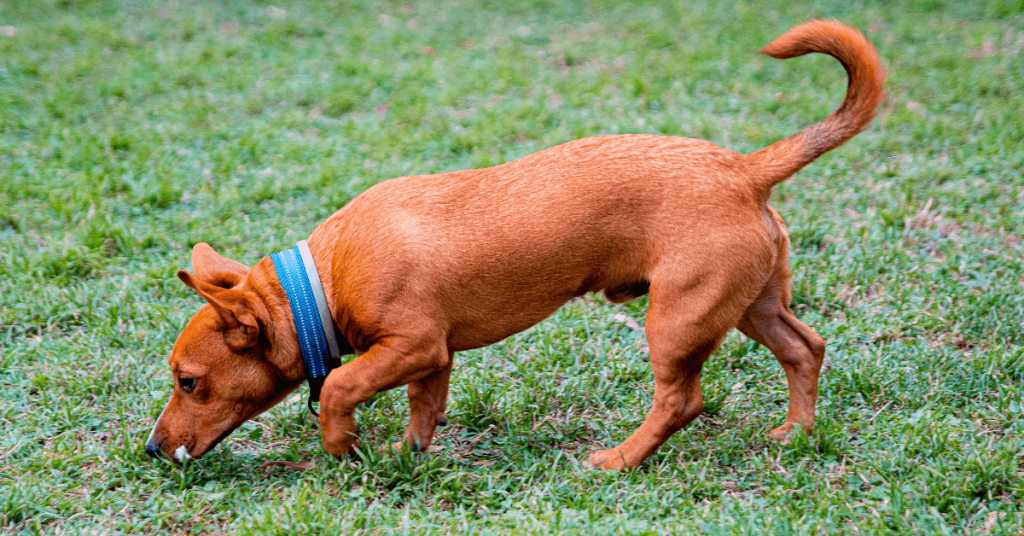
You take your dog outside for a quick bathroom break, but apparently your dog has other plans. First comes the sniffing. Then a few steps to the left. Another sniff. Two circles. A move to a completely different patch of grass. Then, when you think they have finally chosen the perfect spot, the whole process starts again.
If you have ever stood in the yard holding a poop bag while your dog carefully inspects what seems like every blade of grass, you have probably wondered what could require this much preparation. To us, it looks like unnecessary procrastination. To a dog, however, that patch of grass contains smells, information, textures, and social signals that we barely notice.
Circling and sniffing before pooping are usually normal dog behaviors. Dogs rely heavily on scent to understand their surroundings, and bathroom time is also how they leave information for other dogs. The American Kennel Club notes that sniffing, circling, scent marking, and choosing a suitable location can all be part of a dog’s pre-poop routine.
It is another good example of a behavior that seems strange to us but makes more sense from a dog’s perspective. We cover plenty of others in our guide to weird dog behaviors.
Why a Consistent Potty Routine Matters
Dogs often do best when they go out on a predictable schedule. Regular trips outside after waking, eating, exercising, and before bedtime can help your dog develop a more consistent poop routine and make it easier to recognize what is normal for them.
A steady routine also makes changes easier to notice. If your dog suddenly needs much longer to find a spot, starts going more or less often, strains, or produces stool that looks different than usual, that change may be worth watching. Our guide on how many times a day dogs normally poop can help you understand what is typical based on age, diet, activity, and routine.
Once you know your dog’s normal bathroom routine, it is also easier to choose a cleanup schedule that keeps up with the amount of waste they produce. Compare our dog poop removal plans and pricing to see which service frequency fits your yard and number of dogs.
Of course, once your dog finally finds the perfect spot, there is still something left behind. If you would rather spend your outdoor time walking, playing, or letting your dog sniff instead of scooping, our dog poop removal service can keep the yard clean on a regular schedule.
We Scoop Poop
Get your yard back without the hassle. Click below for a free instant quote for professional dog poop cleanup in Oklahoma City—no obligations, no contracts, and no hidden fees.
That little pre-poop routine can involve scent, comfort, instinct, movement, and communication. Here is what may be happening while your dog searches for the perfect spot.
Dogs sniff the ground to investigate scent left by other dogs and animals before deciding where they want to go.
Grass, weather, noise, nearby animals, and unfamiliar surfaces can all affect whether a bathroom spot feels comfortable.
Poop, anal sac secretions, and scent associated with the paws can all contribute to canine scent communication.
Circling may simply be part of an instinctive bathroom ritual that helps a dog inspect the area and get into position.
Walking and movement can help dogs get ready for a bowel movement, which is why some dogs need a short walk before they poop.
A few circles are usually normal. Repeated attempts, straining, pain, or an inability to pass stool deserve veterinary attention.
Why Dogs Circle and Sniff Before Pooping
There probably isn’t one single reason every dog does it. A dog’s pre-poop routine can combine scent, comfort, instinct, movement, and habit.
1. Dogs Are Reading the Scents Around Them
Dogs experience the world through smell much more intensely than we do.
When your dog lowers their nose and carefully explores the grass, they may be gathering information left by other dogs and animals. Urine, feces, and anal sac secretions all carry odor information that dogs can investigate. AKC explains that a dog’s anal sacs release strongly scented fluid and that bowel movements can carry those scents into the environment.
That means the long pre-poop sniff may do more than delay your walk. Your dog may be investigating who has been there before deciding where they want to go.
2. They Are Choosing a Comfortable Spot
Some dogs are simply picky about where they poop.
Grass height, leaves, wet ground, snow, unfamiliar surfaces, nearby dogs, people, traffic, and noise can all influence whether a location feels comfortable.
One theory described by AKC is that circling may help dogs inspect and prepare an area before eliminating, much like some dogs circle before lying down.
That helps explain why your dog may reject one seemingly perfect patch of grass and move several feet away before starting the routine again.
3. Pooping Is Part of Canine Scent Communication
To us, poop is waste that needs to be picked up.
To dogs, it can also carry scent information.
Dogs have anal sacs beside the anus that produce distinctive secretions. Those sacs commonly empty during a bowel movement, adding scent to the stool. Dogs can therefore learn information about other dogs by investigating those odors.
Sniffing before pooping may be part of that broader scent-based conversation: investigate what is already there, choose a spot, leave your own scent, and move on.
4. Circling May Be an Instinctive Routine
Domestic dogs still perform behaviors that likely developed long before they slept on couches and lived behind backyard fences.
Circling may be part of an inherited bathroom routine. A few turns allow the dog to inspect the immediate area, position their body, and settle into a comfortable stance.
Not every dog circles. Some barely pause before going. Others seem to have a detailed ritual.
Both can be normal.
5. Walking and Movement May Help Them Get Ready
Many dogs are more likely to poop after walking for several minutes than immediately after stepping outside.
Movement can help stimulate normal bowel activity, and AKC notes that walking and circling may help a dog get ready to pass stool.
That does not mean repeated spinning treats constipation. If your dog keeps circling, squatting, or straining without producing stool, that is different from a normal pre-poop routine.
Bathroom timing can also affect when a dog is ready to go. For more on normal potty timing by age and routine, read our guide on how long dogs can hold their poop.
Do Dogs Really Face North When They Poop?
This may sound like an internet myth, but research supports it.
A 2013 study observed 70 dogs from 37 breeds during 1,893 bowel movements and 5,582 urinations over two years. Researchers reported that the dogs tended to align their bodies along a north-south axis while eliminating when Earth’s magnetic field was calm. That preference disappeared when magnetic conditions were unstable.
That is interesting, but we should not take the finding beyond what the study shows.
The research does not prove that dogs circle because they are trying to find north. It shows an association between body orientation and certain magnetic conditions.
So magnetic sensitivity may be one piece of the puzzle, but scent, comfort, habit, and the immediate environment remain practical explanations for the behavior we see every day.
Why Does My Dog Take Forever to Find a Place to Poop?
Some dogs turn bathroom breaks into a full investigation.
Your dog may take longer because:
- Other dogs have recently used the area
- There are interesting smells nearby
- The grass is wet, tall, or uncomfortable
- Traffic or people are distracting them
- Another animal makes them nervous
- They prefer to walk before pooping
- They are in an unfamiliar place
- They have a strong bathroom routine
We usually do not need to rush a dog that is comfortably sniffing and looking for a spot.
The key word is comfortably.
A dog casually inspecting several spots is different from a dog repeatedly trying to defecate and failing.
When Is Circling Before Pooping Normal?
Normal pre-poop behavior usually follows a recognizable pattern.
Your dog sniffs, walks around, circles a few times, chooses a spot, squats, produces a normal bowel movement, and continues walking.
The exact number of circles doesn’t matter.
What matters more is whether your dog appears comfortable and successfully passes stool.
If your dog has followed roughly the same routine for years, that behavior is usually less concerning than a sudden change.
When Should You Worry About Excessive Circling?
Pay closer attention when your dog appears to be searching for a spot but is actually struggling to poop.
Constipation can cause difficult or painful defecation, repeated straining, and hard or dry stool. VCA notes that dogs with constipation may strain or experience pain while attempting to defecate.
Contact your veterinarian if you notice:
- Repeated circling without producing stool
- Repeated squatting or straining
- Crying or obvious discomfort
- Very hard or dry stool
- Blood in the stool
- Vomiting
- Loss of appetite
- Weakness or unusual tiredness
- A sudden major change in bathroom habits
A simple way to think about it is this:
Taking time to choose a spot is normal. Struggling to pass stool is not.
Find The Perfect Scoop Plan
Answer a few quick questions about your yard and dogs, and we’ll help point you toward the cleanup plan that makes the most sense.
What Happens After Your Dog Poops?
Some dogs finish their bathroom routine by kicking or scratching the grass behind them. That behavior differs from the sniffing and circling that happens before they poop.
We cover that behavior separately in our guide on why dogs kick grass after pooping, including what the kicking may mean, how scent marking plays a role, and when you may want to redirect it.
Should You Let Your Dog Sniff Before Pooping?
Usually, yes.
Unless you are somewhere unsafe or need to move quickly, giving your dog a few minutes to sniff and choose a bathroom spot is perfectly reasonable.
We can make potty breaks easier by:
- Offering regular bathroom opportunities
- Giving the dog enough time outdoors
- Taking a short walk instead of only opening the back door
- Using a familiar potty area
- Keeping grass reasonably maintained
- Keeping old pet waste picked up
- Rewarding successful outdoor bathroom habits
A cleaner potty area can also make it easier to notice changes in your dog’s stool and bathroom habits. If you would rather leave the regular cleanup to someone else, our dog poop removal service can keep the backyard ready for the next sniff-circle-poop routine.
The “Bottom” Line: Why Dogs Circle Before Pooping
Dogs usually sniff and circle before pooping because bathroom time involves more than simply finding an empty patch of grass.
They may be investigating scents, choosing a comfortable spot, following an instinctive routine, positioning their body, and communicating through scent.
A few circles and a long sniff are usually normal.
What matters most is whether the behavior changes. Repeated circling, straining, pain, blood in the stool, vomiting, or an inability to pass stool can signal a problem that deserves veterinary attention.
So the next time your dog spends several minutes examining the yard before finally choosing a spot, remember the grass contains far more information for your dog’s nose than for ours.
While your dog takes their time sniffing, circling, and finding the perfect spot, we’ll handle what they leave behind. No contracts. Local, veteran-operated service. Less mess. Get your instant price today!
8 FAQs About Dogs Circling & Sniffing Before Pooping
Why do dogs circle before they poop?
Why do dogs sniff so much before pooping?
Is it normal for dogs to circle several times before pooping?
Do dogs really face north when they poop?
Why does my dog take so long to find a place to poop?
Why does my dog sniff the same spot before pooping?
When should I worry about my dog circling before pooping?
How can I help my dog poop faster on walks?

About Carlton
Carlton Wolf is the founder of Poop Free OKC, a veteran-owned pet waste removal company serving Oklahoma City and the surrounding metro. As a U.S. Coast Guard veteran, Carlton built Poop Free OKC to provide reliable, professional yard cleanup for busy dog owners who want a cleaner, safer outdoor space without the hassle.
PILES OF KNOWLEDGE
Pet Health & Safety
Pet Waste Removal Tips
Pet Yard & Home Care
Grand Opening Special
Claim Your FREE Poop Scoop!
*First 50 who sign up for recurring service.
You May Also Like…
How to Clean Dog Poop From Artificial Turf
Dog poop can leave residue and odor behind on artificial grass. Learn how to remove solid and soft waste, rinse correctly, clean the turf, and prevent smells.
How to Clean Up Dog Diarrhea in Your Yard
Dog diarrhea can be difficult to remove from grass without making the mess bigger. Learn how to handle fresh and dried diarrhea, clean your tools, avoid common mistakes, and know when it is time to call your veterinarian.
How to Stop Your Dog From Humping
Dog humping can be caused by excitement, stress, habit, attention-seeking, or sexual behavior. Learn how to stop it and when to call your vet.
Why Is My Dog Pooping in the House All of a Sudden?
A dog suddenly pooping in the house may have a health issue, stress, aging changes, diet trouble, or a schedule problem. Learn what to check and how to fix it.
Why Does My Dog Lick Me?
Dogs lick people for many reasons, including affection, attention, taste, stress, greeting, and learned behavior. Learn what licking usually means and when it may signal a problem.
How to Stop Your Dog From Peeing in the House
Dog peeing in the house can happen because of health issues, marking, stress, routine changes, or training gaps. Learn what to do next.