Home » Blog » Pet Waste Removal Tips »
Artificial grass can make yard maintenance easier, but owning a dog adds one job that never disappears: picking up poop. Unlike natural grass, artificial turf has synthetic blades, backing, infill, and a drainage system that can trap residue and odors if you don’t clean up pet waste properly.
If you have ever picked up a pile only to notice something still stuck between the turf blades, you know the problem. The poop may be gone, but the evidence is not. Soft stool can smear into the fibers, tiny pieces can disappear into the infill, and warm Oklahoma weather can make leftover odor noticeable quickly.
The good news is that cleaning dog poop from artificial grass is usually simple when we follow the right order: remove the waste first, clean the residue second, rinse carefully, and let the area dry.
Why Artificial Grass Needs a Different Cleanup Routine
Artificial grass does not behave exactly like a natural lawn. No living soil surface lies directly beneath the blades to break down leftover organic material, and many turf systems include infill and drainage layers where small amounts of residue can collect.
That makes prompt removal important.
The CDC recommends picking up dog poop even in our own yards because pet waste can contain germs that affect people and animals.
Regular cleanup also makes artificial turf much easier to maintain. The Synthetic Turf Council recommends routine surface cleaning and maintenance while following the specific care instructions provided by the turf installer or system manufacturer.
If you would rather leave the routine scooping to us, our pet waste removal service can keep pet waste from piling up between cleanups.
Once you know how often your dogs use the yard, you can also compare our dog poop removal plans and pricing to find a cleanup schedule that matches your household.
We Scoop Poop
Get your yard back without the hassle. Click below for a free instant quote for professional dog poop cleanup in Oklahoma City—no obligations, no contracts, and no hidden fees.
The order matters. Remove the waste first, clean remaining residue, rinse carefully, and allow the turf to dry before pets return.
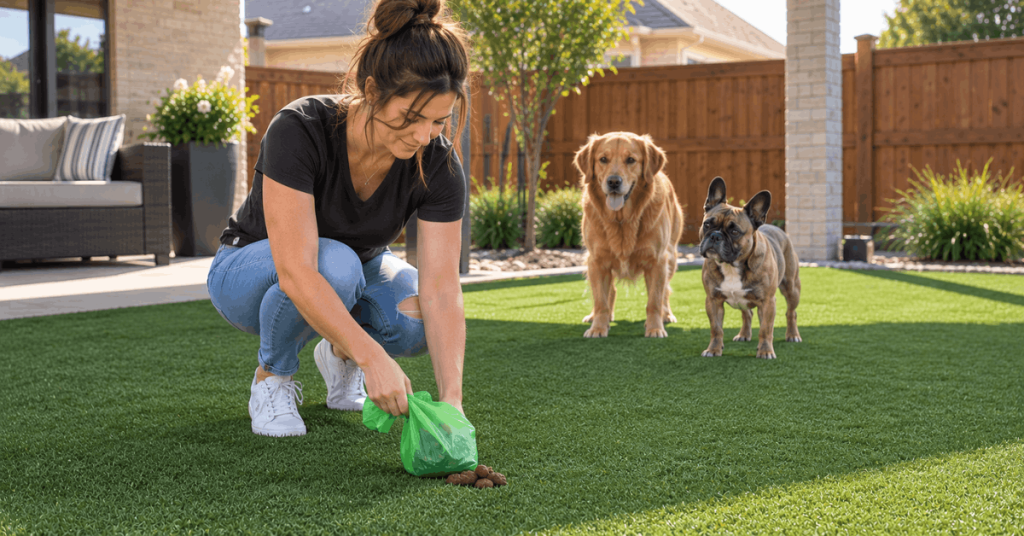
Use a bag or pooper scooper to remove the entire pile before adding water or cleaner to the artificial grass.
Look closely for small pieces or residue caught between the turf blades or resting on top of the infill.
Spot-clean remaining material with water and a cleaner approved for your artificial turf system when necessary.
Use enough water to remove cleaner and residue without washing pet waste toward sidewalks, streets, or storm drains.
Give the cleaned area time to drain and dry before pets or children use it again, especially after using a cleaning product.
Frequent poop pickup prevents waste from being stepped on, pressed into the fibers, or left long enough to create stronger odors.
How to Clean Solid Dog Poop From Artificial Grass
Firm dog poop is the easiest type to remove.
1. Pick It Up Before Doing Anything Else
Use a dog waste bag, rake-and-pan system, or pooper scooper and lift the pile straight off the turf.
Avoid smashing the waste into the artificial grass. Stepping on a pile or aggressively scraping it can push small pieces down between the synthetic fibers.
2. Inspect the Turf Closely
After the pile is gone, separate the turf blades with a scoop or gloved hand and look for any remaining pieces.
Pick up anything you can see before using water.
3. Rinse the Spot if Needed
If the poop was firm and left no visible residue, you may not need to do much more.
When residue remains, use a gentle stream of water rather than blasting the turf with high pressure.
EPA guidance warns that pet waste carried by stormwater can move pollutants into storm drains and waterways, so we should avoid intentionally washing fecal material onto sidewalks, driveways, or streets.
How to Clean Soft Dog Poop From Artificial Grass
Soft stool requires more patience.
The biggest mistake is spraying it immediately. Water can break the pile apart and push the mess deeper between the turf fibers.
Instead:
- Remove as much material as possible with a scoop, disposable cardboard, or paper towels.
- Work from the outside toward the center instead of smearing the stool outward.
- Pick out visible pieces between the fibers.
- Spot-clean the remaining residue.
- Rinse only after you’ve removed most of the waste.
If your dog has true diarrhea rather than one soft bowel movement, use our separate guide on how to clean dog diarrhea from your yard.
What Cleaner Should You Use on Artificial Grass?
This is where we want to be careful.
Artificial grass products are not all identical. Turf fibers, infill, backing, adhesives, and drainage systems may vary by installation.
The Synthetic Turf Council recommends following the maintenance procedures provided by the company responsible for the turf system.
For routine spot cleaning, start with the cleaning instructions supplied by your turf manufacturer or installer. A mild soap solution or pet-specific cleaner labeled as compatible with synthetic turf may be appropriate for many systems.
Don’t assume a strong household cleaner, bleach mixture, solvent, or disinfectant is safe for your artificial grass just because it works on another surface.
CDC guidance also emphasizes following cleaner and disinfectant labels exactly and keeping pets away until products are used, rinsed, or dried as directed.
Does Vinegar Disinfect Artificial Grass?
Vinegar is commonly suggested online for pet areas, but we should separate odor control from disinfection.
The CDC says there isn’t enough research to recommend vinegar as a reliable way to disinfect pet items because it doesn’t kill all germs.
Before putting vinegar—or any homemade mixture—on artificial turf, check the maintenance instructions for your specific system.
How to Get Dog Poop Smell Out of Artificial Grass
If the poop is gone but the smell remains, first make sure no waste is hiding between the fibers.
Then check:
- The turf blades
- Infill
- Edges and seams
- Drainage areas
- Spots repeatedly used as a bathroom
Persistent odor usually means organic residue is still present somewhere or the area needs a deeper cleaning.
Use a cleaner designed for pet odors and approved for artificial turf, following the label directions carefully.
Repeated odor in the same area may also mean the problem extends below the visible turf. If routine cleaning no longer works, contact the company that installed the turf so they can evaluate the infill and drainage system.
How Often Should You Pick Up Dog Poop From Artificial Grass?
The sooner, the better.
Frequent pickup prevents piles from being stepped on, smashed between the fibers, or left to sit through hot weather and rain.
CDC guidance recommends removing dog feces from yards rather than leaving it in the environment.
The right cleanup schedule depends on how many dogs use the yard and how often they poop. Our guide on how often to clean up dog poop in your yard can help you choose the schedule that makes sense.
Find The Perfect Scoop Plan
Answer a few quick questions about your yard and dogs, and we’ll help point you toward the cleanup plan that makes the most sense.
How to Clean Your Pooper Scooper Afterward
The artificial grass is only part of the cleanup.
If your scoop or rake touches dog poop, remove any visible waste before storing it. Wash hard, washable tools with soap or detergent and water, following the tool manufacturer’s directions.
CDC guidance explains that cleaning removes dirt and germs from a surface, while disinfecting is a separate process. When disinfecting pet-related items, follow the product label and keep pets away until the surface is safe for them again.
Wash your hands with soap and running water after handling dog waste, even if you used gloves or a bag.
Common Artificial Grass Dog Poop Cleaning Mistakes
A few mistakes can turn a small cleanup into a bigger job:
- Hosing the poop before picking it up
- Scrubbing soft stool deeper into the fibers
- Leaving small pieces in the infill
- Using harsh chemicals without checking turf compatibility
- Allowing piles to accumulate
- Washing waste toward a storm drain
- Ignoring recurring odor
Once you remove the waste, dispose of it properly. Our guide on proper dog waste disposal in Oklahoma City explains what to do with the bag after cleanup.
And if you have ever wondered why we take pet waste cleanup seriously, our guide on what’s really in dog poop explains some of the bacteria, parasites, and other contaminants that may be present.
The “Bottom” Line: Cleaning Dog Poop From Artificial Grass
Artificial grass may eliminate mowing, but it does not eliminate dog poop cleanup.
The best routine is straightforward: pick up waste promptly, remove anything trapped between the fibers, spot-clean residue when needed, rinse carefully, and use only cleaners compatible with your turf system.
Soft poop takes more patience because adding water too early can spread the mess. Persistent odor deserves a closer look at the fibers, infill, and drainage, not just more fragrance.
Most importantly, consistency makes artificial turf easier to maintain. The less time poop sits on the surface, the less opportunity it has to be stepped on, smeared into the fibers, or become an odor problem.
While your dog enjoys a low-maintenance lawn, we can handle the part artificial grass cannot eliminate. No contracts. Local, veteran-operated service. Less mess. Get your instant price today!
8 FAQs About Cleaning Dog Poop From Artificial Grass
What is the best way to clean dog poop from artificial grass?
Should I hose dog poop off artificial grass?
What cleaner should I use for dog poop on artificial grass?
How do I remove dog poop smell from artificial grass?
How do I clean dog diarrhea from artificial grass?
Can I use bleach on artificial grass after dog poop?
Does dog poop damage artificial grass?
How often should I clean dog poop from artificial grass?

About Carlton
Carlton Wolf is the founder of Poop Free OKC, a veteran-owned pet waste removal company serving Oklahoma City and the surrounding metro. As a U.S. Coast Guard veteran, Carlton built Poop Free OKC to provide reliable, professional yard cleanup for busy dog owners who want a cleaner, safer outdoor space without the hassle.
PILES OF KNOWLEDGE
Pet Health & Safety
Pet Waste Removal Tips
Pet Yard & Home Care
Grand Opening Special
Claim Your FREE Poop Scoop!
*First 50 who sign up for recurring service.
You May Also Like…
Why Do Dogs Circle and Sniff Before They Poop?
Dogs often sniff, circle, and carefully choose a spot before they poop. Learn why dogs do this, what scent has to do with it, and when the behavior may signal a problem.
How to Clean Up Dog Diarrhea in Your Yard
Dog diarrhea can be difficult to remove from grass without making the mess bigger. Learn how to handle fresh and dried diarrhea, clean your tools, avoid common mistakes, and know when it is time to call your veterinarian.
How to Stop Your Dog From Humping
Dog humping can be caused by excitement, stress, habit, attention-seeking, or sexual behavior. Learn how to stop it and when to call your vet.
Why Is My Dog Pooping in the House All of a Sudden?
A dog suddenly pooping in the house may have a health issue, stress, aging changes, diet trouble, or a schedule problem. Learn what to check and how to fix it.
Why Does My Dog Lick Me?
Dogs lick people for many reasons, including affection, attention, taste, stress, greeting, and learned behavior. Learn what licking usually means and when it may signal a problem.
How to Stop Your Dog From Peeing in the House
Dog peeing in the house can happen because of health issues, marking, stress, routine changes, or training gaps. Learn what to do next.