What’s Really in Dog Poop? The Gross Truth Most Owners Ignore
Home » Blog » Pet Yard & Home Care »
Most people think dog poop is just unpleasant.
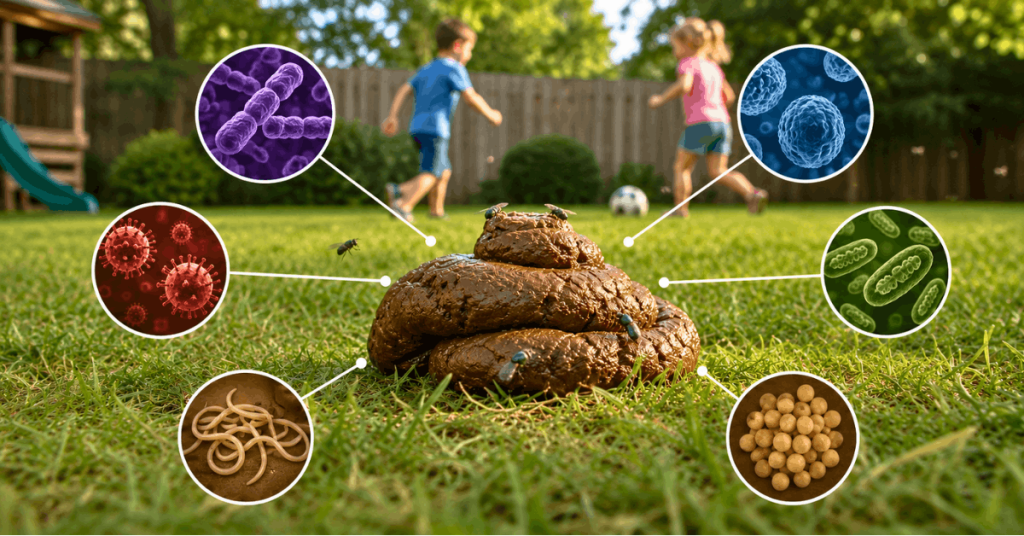
But the reality is—it can contain bacteria, parasites, viruses, and contaminants that affect your lawn, pets, family, and even local water systems.
And unlike common myths, dog waste is not a safe fertilizer. In fact, one of the biggest dog poop myths is that leaving waste in the yard somehow helps the grass, when it often does the exact opposite.
In fact, leaving dog poop in the yard too long can create much bigger problems than most homeowners realize.
This guide breaks down:
- What’s actually inside dog poop
- The health risks it can create
- How it affects your lawn
- And why proper cleanup matters more than most people think
What’s left behind in dog poop can impact far more than your lawn, which is why consistent cleanup matters.
Why Dog Poop Is Different From Other Animal Waste
One of the biggest misconceptions is:
“It’s natural, so it must be good for the grass.”
Not true.
Unlike other composted waste, dog poop contains:
- high protein waste
- acidic compounds
- excess nitrogen
- harmful microorganisms
That combination makes it much harsher on lawns and much less safe for the environment. Unlike composted manure, dog poop is not fertilizer, and allowing it to build up can create long-term lawn and soil problems.
We Scoop Poop
Get your yard back without the hassle. Click below for a free instant quote for professional dog poop cleanup in Oklahoma City—no obligations, no contracts, and no hidden fees.
Dog poop is more than just an unpleasant mess. It can contain harmful contaminants that affect your lawn, pets, and family if left untreated.
Dog waste may contain bacteria like E. coli and Salmonella that can spread through contaminated soil, surfaces, and runoff water.
Parasites such as roundworms and hookworms can survive in the soil long after the waste itself appears gone.
Excess nitrogen and acidic compounds in dog poop can burn grass, create dead spots, and damage healthy lawns.
Waste that sits too long traps moisture and creates strong lingering odors that become harder to eliminate over time.
Rainwater can carry bacteria and contaminants from dog waste into storm drains, sidewalks, and nearby water systems.
Repeated exposure to untreated pet waste may increase health risks for children, pets, and anyone spending time outdoors.
The Bacteria Found in Dog Poop
Dog waste can carry several types of harmful bacteria, and a single pile of dog poop may contain millions of bacteria and other microorganisms.
When left in the yard, those contaminants can spread through soil, rainwater runoff, grass, shoes, and outdoor surfaces.
Some of the most common bacteria found in dog poop include:
E. coli
Dog poop can contain strains of E. coli that may cause stomach cramps, diarrhea, nausea, and other gastrointestinal illnesses. The bacteria can spread through contaminated soil, grass, shoes, or outdoor surfaces if waste is not cleaned up properly.
Salmonella
Salmonella may spread through contact with contaminated dog waste, soil, water, or yard surfaces. It can affect both pets and humans, and is one reason proper handwashing and regular cleanup are important.
Campylobacter
Campylobacter is a bacterium commonly linked to intestinal illness in both people and animals. Exposure may lead to symptoms such as diarrhea, fever, stomach pain, and digestive discomfort, especially in children or individuals with weaker immune systems.
Fecal Coliform Bacteria
Fecal coliform bacteria are one of the main reasons dog waste becomes an environmental concern. When rainwater carries untreated waste into storm drains and runoff systems, these bacteria may spread into nearby soil and waterways, contributing to contamination problems.
Common Parasites Hidden in Dog Waste
Even healthy-looking dogs can carry parasites.
Some of the most common include:
- roundworms
- hookworms
- whipworms
- giardia
These parasites may survive in soil long after the waste itself appears gone.
Can Dog Poop Make Humans Sick?
Yes—especially children, older adults, and people with weakened immune systems.
Exposure may happen through:
- contaminated soil
- lawn contact
- touching shoes or surfaces
- water runoff after rain
This is one reason regular cleanup matters more than appearance alone.
What Dog Poop Does to Your Lawn
Dog poop doesn’t break down like fertilizer. Pet waste can disrupt the pH balance of your lawn, making it harder to maintain healthy grass over time.
Instead, it often:
- burns grass
- creates dead patches
- traps odor
- introduces bacteria into the soil
Many homeowners are surprised by how long dog poop takes to decompose, especially when waste builds up repeatedly in the same areas.
Some homeowners also confuse dog poop damage with urine spots, but there are ways to help prevent brown spots caused by dog urine before the lawn becomes permanently damaged.
Rain Makes the Problem Worse
Rain doesn’t magically wash dog poop away. Many homeowners are surprised by what actually happens to dog poop when it rains, especially as runoff spreads bacteria into nearby soil and drainage systems.
Instead, runoff can spread:
- bacteria
- parasites
- contaminants
Rain just spreads contaminants into nearby soil, storm drains, sidewalks, and water systems.
That’s why pet waste laws exist in many cities.
How Long Does Dog Poop Take to Decompose?
Dog poop does not break down nearly as fast as many people think.
Depending on weather conditions, moisture, and the size of the waste, dog poop can take weeks or even months to decompose fully. Cooler temperatures and dry conditions often further slow the process.
Understanding how long dog poop takes to decompose helps explain why consistent cleanup matters much more than many people realize.
Even after the visible waste disappears, bacteria and parasites may remain in the soil for a long time.
When Does Dog Poop Stop Being Dangerous?
Even after visible waste disappears, bacteria and parasites may remain behind in the soil.
Factors that affect breakdown include:
- temperature
- moisture
- sunlight
- cleanup frequency
In many cases, contamination can linger far longer than people expect.
Find The Perfect Scoop Plan
Answer a few quick questions about your yard and dogs, and we’ll help point you toward the cleanup plan that makes the most sense.
The Biggest Mistake Dog Owners Make
The most common mistake? Waiting too long between cleanups.
The issue becomes even more pronounced in multi-dog households, where owners underestimate how often dogs poop each day and how quickly waste can accumulate.
Consistent removal:
- reduces bacteria
- improves odor
- protects the lawn
- keeps the yard more usable
Why Professional Cleanup Helps
Professional dog poop cleanup services aren’t just about convenience.
It helps:
- reduce buildup
- minimize contamination
- Keep outdoor spaces cleaner
- maintain a healthier yard environment
Many homeowners also pair regular cleanup with deodorizing or sanitizing treatments for deeper protection.
The “Bottom” Line
Dog poop contains much more than most people realize.
What looks like a small inconvenience can actually introduce bacteria, parasites, lawn damage, and contamination into your outdoor space.
The best solution is simple: Consistent cleanup and proper disposal.
A cleaner yard is safer, healthier, and much easier to enjoy.
👉 Ready for a cleaner, healthier yard? Get a dog poop removal quote in Oklahoma City and let Poop Free OKC handle the dirty work.
Frequently Asked Questions
Is dog poop actually harmful?
Does dog poop carry bacteria?
Can dog poop contaminate soil?
Is dog poop considered fertilizer?
How long do parasites live in dog poop?
Can rain spread dog poop bacteria?
Why does dog poop kill grass?
What’s the safest way to handle dog poop?

About Carlton
Carlton Wolf is the founder of Poop Free OKC, a veteran-owned pet waste removal company serving Oklahoma City and the surrounding metro. As a U.S. Coast Guard veteran, Carlton built Poop Free OKC to provide reliable, professional yard cleanup for busy dog owners who want a cleaner, safer outdoor space without the hassle.
PILES OF KNOWLEDGE
Pet Health & Safety
Pet Waste Removal Tips
Pet Yard & Home Care
Grand Opening Special
Claim Your FREE Poop Scoop!
*First 50 who sign up for recurring service.
You May Also Like…
How to Clean Dog Poop From Artificial Turf
Dog poop can leave residue and odor behind on artificial grass. Learn how to remove solid and soft waste, rinse correctly, clean the turf, and prevent smells.
Why Do Dogs Circle and Sniff Before They Poop?
Dogs often sniff, circle, and carefully choose a spot before they poop. Learn why dogs do this, what scent has to do with it, and when the behavior may signal a problem.
How to Clean Up Dog Diarrhea in Your Yard
Dog diarrhea can be difficult to remove from grass without making the mess bigger. Learn how to handle fresh and dried diarrhea, clean your tools, avoid common mistakes, and know when it is time to call your veterinarian.
How to Stop Your Dog From Humping
Dog humping can be caused by excitement, stress, habit, attention-seeking, or sexual behavior. Learn how to stop it and when to call your vet.
Why Is My Dog Pooping in the House All of a Sudden?
A dog suddenly pooping in the house may have a health issue, stress, aging changes, diet trouble, or a schedule problem. Learn what to check and how to fix it.
Why Does My Dog Lick Me?
Dogs lick people for many reasons, including affection, attention, taste, stress, greeting, and learned behavior. Learn what licking usually means and when it may signal a problem.