Home » Blog » Health & Safety »
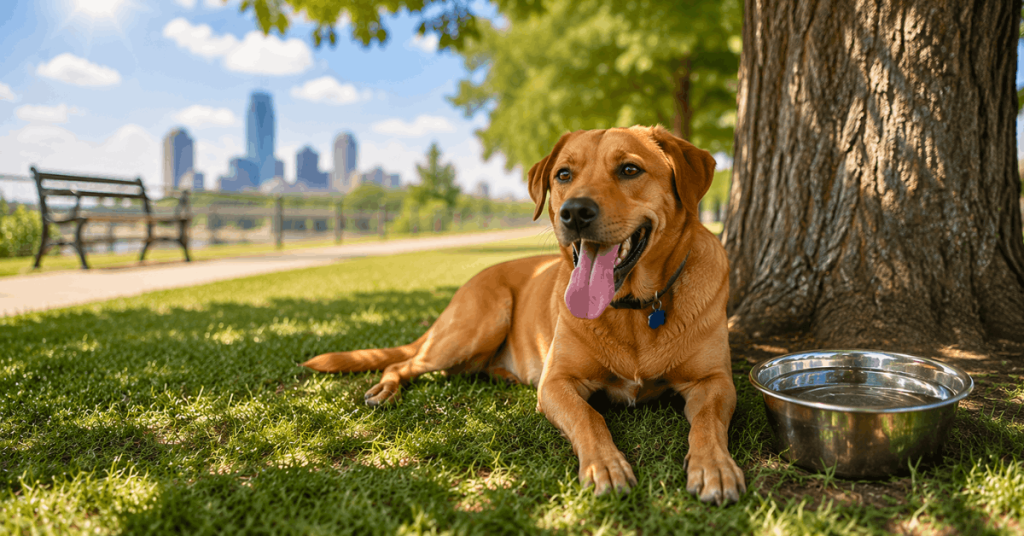
Oklahoma summers can be rough on dogs. Between high temperatures, thick humidity, hot sidewalks, and yards with very little shade, our pets can overheat faster than many people realize. So, how hot is too hot for your dog?
As a general rule, once the temperature reaches 80°F, we should start limiting outdoor activity. Once it reaches 90°F or higher, most dogs should only go outside long enough to potty and come back inside. Heat risk starts even lower when humidity is high, because dogs cool themselves mostly by panting, and humid air makes that harder. PetMD notes that temperatures over 70°F with humidity can increase risk, 80–90°F should mean short walks only, and above 90°F should be limited to quick bathroom breaks.
That does not mean every dog reacts the same. Breed, age, weight, coat type, health, shade, water, humidity, and ground temperature all matter.
We Scoop Poop
Get your yard back without the hassle. Click below for a free instant quote for professional dog poop cleanup in Oklahoma City—no obligations, no contracts, and no hidden fees.
Oklahoma heat can become dangerous for dogs fast. Use this simple temperature guide to know when your dog can safely play, when to shorten outdoor time, and when to keep them inside.
Most healthy dogs can usually enjoy normal outdoor time when temperatures stay under 75°F. Still, provide fresh water, shade, and breaks, especially if your dog is older, overweight, thick-coated, or sensitive to heat.
This is when dog owners should start paying closer attention. Keep hard running and rough play limited, watch for heavy panting, and make sure your dog has a cool place to rest.
At this range, outdoor time should be shorter and calmer. Choose shaded areas, avoid hot pavement, bring water, and skip intense games like fetch during the warmest part of the day.
Temperatures above 85°F can become risky for many dogs, especially during humid Oklahoma weather. Stick to quick potty breaks, slow walks, shade, and plenty of cool water.
Once it reaches 90°F or higher, most dogs should avoid regular walks, running, and outdoor play. Let them out long enough to go potty, then bring them back inside to cool off.
Triple-digit heat is dangerous for dogs. Keep them indoors except for emergency potty breaks, avoid pavement completely, and watch closely for signs of heat stress, weakness, drooling, or confusion.
Why Heat Is So Dangerous for Dogs
Dogs do not cool off the same way we do. People sweat across much of their bodies. Dogs mainly cool themselves through panting and a small amount of sweating through their paw pads. That is why heat can build up quickly, especially during humid weather.
A normal dog’s body temperature is roughly around 99°F to 102.5°F. When a dog’s temperature climbs above 104°F, heat stress becomes a serious concern. Temperatures above 105°F to 106°F can become an emergency. AKC notes that temperatures over 104°F signal heat stress, over 105°F signals heat exhaustion, and over 106°F can mean heatstroke requiring emergency care.
Oklahoma Humidity Makes Heat Worse
In Oklahoma City, Yukon, Mustang, Moore, Bethany, Piedmont, and the surrounding metro, the temperature alone does not tell the whole story. The heat index matters because it combines air temperature and humidity. The National Weather Service defines heat index as how hot it feels when relative humidity is added to the actual air temperature.
That means an 88°F afternoon can feel much hotter to your dog when the humidity is high. If the air feels heavy, sticky, and hard to breathe, your dog is probably feeling it too.
Hot Pavement Can Burn Your Dog’s Paws
Air temperature is only part of the problem. Pavement, concrete, artificial turf, gravel, patios, and metal surfaces can become much hotter than the air.
AKC reports that when the air temperature is 86°F, asphalt can reach around 135°F. They also recommend using the hand test: place your hand on the pavement for 10 seconds. If it is too hot for your hand, it is too hot for your dog’s paws.
This is one reason early morning potty breaks and walks are usually safer than afternoon walks. Grass is usually better than pavement, but even yards can become too hot when there is no shade.
Dogs at Higher Risk in Hot Weather
Some dogs need extra caution in the summer heat. These include:
- Bulldogs, Pugs, Boxers, Boston Terriers, Shih Tzus, and other short-nosed breeds
- Puppies
- Senior dogs
- Overweight dogs
- Dogs with heart or breathing issues
- Thick-coated or dark-coated dogs
- Large dogs that heat up quickly
- Dogs that are not used to the Oklahoma heat
If your dog falls into one of these groups, treat warm days like hot days and hot days like danger days.
Warning Signs Your Dog Is Too Hot
Heat stress can move fast. Watch for:
- Heavy panting that does not slow down
- Drooling or thick saliva
- Weakness or wobbling
- Bright red, pale, blue, or purple gums
- Vomiting or diarrhea
- Confusion or acting “off”
- Refusing to walk
- Collapse
- Seizures
The AVMA lists excessive panting, restlessness, drooling, weakness, collapse, and other symptoms as signs that emergency veterinary care may be needed.
What to Do if Your Dog Overheats
Move your dog inside or into deep shade immediately. Offer small amounts of cool water. Use cool water, not ice water, on the body, belly, paws, and armpit area. Turn on a fan or air conditioning.
Do not use ice baths or alcohol on the paws. If your dog is weak, vomiting, collapsing, confused, or struggling to breathe, call your veterinarian or an emergency vet right away. Heatstroke is a medical emergency.
Best Times to Walk Your Dog in Summer
During hot Oklahoma months, the safest walking times are usually:
- Early morning, before the pavement heats up
- Late evening after the sun drops
- Shaded routes instead of open sidewalks
- Grass instead of asphalt when possible
Avoid the hottest part of the day, especially from late morning through early evening. Even a short walk can become dangerous when the ground is hot and the air is humid.
Find The Perfect Scoop Plan
Answer a few quick questions about your yard and dogs, and we’ll help point you toward the cleanup plan that makes the most sense.
Don’t Forget the Backyard
Backyards can feel safer than sidewalks, but they can still become hot fast. Dogs can overheat while playing, chasing balls, lying in full sun, or waiting outside without enough shade and water.
Dog waste also becomes worse in the summer heat. Hot weather can increase odor, attract flies, and make the yard less enjoyable for the whole family. That is why many homeowners use local dog poop removal services to keep the yard cleaner during the hottest months.
For heavy buildup, a one-time cleanup can help reset the yard before summer odors get out of hand. For ongoing help, a weekly dog poop removal keeps the yard easier to maintain during the worst of heat, humidity, and flies.
We also recommend odor and cleanliness support during the summer. PF Fresh™ Yard Deodorizing helps control strong odors in the yard, while PF Sanitize™ Backyard Sanitization adds another layer of cleanliness for families and pets.
Simple Summer Safety Tips for Dog Owners
Summer heat can sneak up on dogs fast, especially during Oklahoma’s hot and humid days. A few small changes can make a big difference in keeping your dog safe, comfortable, and out of danger.
- Keep fresh water available at all times.
Place clean water bowls inside and outside. On extra-hot days, check them often because dogs may drink more than usual, and outdoor bowls can heat up quickly. - Add shade to your yard.
If your yard lacks trees or covered areas, use a patio umbrella, canopy, shade sail, or a covered porch so your dog has a cooler place to rest. - Limit outdoor time when temperatures reach 80°F or higher.
Once the temperature climbs, shorten walks, reduce playtime, and avoid long periods outside. Quick potty breaks are usually safer than extended outdoor activity. - Avoid midday and afternoon walks.
The hottest part of the day is usually the most dangerous. Walk your dog early in the morning or later in the evening when the air and pavement are cooler. - Check the pavement before walking.
Place the back of your hand on the sidewalk or driveway for several seconds. If it feels too hot for your hand, it is too hot for your dog’s paws. - Stick to grass when possible.
Grass is usually cooler than concrete, asphalt, or gravel. When taking your dog outside, guide them to shaded grassy areas instead of hot surfaces. - Watch for heavy panting or slowing down.
If your dog starts panting hard, drooling, walking slowly, acting confused, or refusing to move, bring them inside right away and help them cool down. - Do not leave dogs outside unattended in extreme heat.
Even with water, dogs can still overheat if shade is limited or humidity is high. Check on them often and bring them indoors before they struggle. - Never leave your dog in a parked car.
Even a few minutes can become dangerous. Cracking the windows does not keep the car cool enough to protect your dog. - Be extra careful with high-risk dogs.
Puppies, senior dogs, overweight dogs, thick-coated dogs, and short-nosed breeds like Bulldogs, Pugs, and Boxers can overheat faster than other dogs. - Keep the yard clean during hot weather.
Dog poop can smell worse, attract flies, and make the yard unpleasant during summer heat. Staying ahead of waste helps keep your outdoor space cleaner and more comfortable.
Once you understand the temperature risks, use these practical tips for keeping your dog cool in Oklahoma’s summer heat.
The “Bottom” Line: How Hot Is Too Hot for Your Dog?
For most dogs, 80°F is when we should start being careful, 85°F is when outdoor activity should be very limited, and 90°F or higher is too hot for regular walks or play. In Oklahoma, even lower temperatures can become risky due to humidity.
Short potty breaks, shade, water, and early morning walks are the safest approach during summer. When in doubt, bring your dog inside and let the yard wait.
👉 Tired of scooping dog poop in the Oklahoma heat? Let Poop Free OKC handle the dirty work so you and your dog can stay cool. Get your free quote today.
8 Popular FAQs About Dog Heat Safety
Is 90 degrees too hot for a dog?
Yes. For most dogs, 90°F is too hot for normal walks, running, or outdoor play. A quick potty break is usually okay, but dogs should come back inside quickly.
Is 80 degrees too hot to walk a dog?
How long can a dog stay outside in 90-degree weather?
What temperature is unsafe for dogs?
Can hot pavement burn my dog’s paws?
What are the first signs of heatstroke in dogs?
Should I shave my dog in the summer?
What is the safest time to walk a dog in summer?

About Carlton
Carlton Wolf is the founder of Poop Free OKC, a veteran-owned pet waste removal company serving Oklahoma City and the surrounding metro. As a U.S. Coast Guard veteran, Carlton built Poop Free OKC to provide reliable, professional yard cleanup for busy dog owners who want a cleaner, safer outdoor space without the hassle.
PILES OF KNOWLEDGE
Pet Health & Safety
Pet Waste Removal Tips
Pet Yard & Home Care
Grand Opening Special
Claim Your FREE Poop Scoop!
*First 50 who sign up for recurring service.
You May Also Like…
How to Clean Up Dog Diarrhea in Your Yard
Dog diarrhea can be difficult to remove from grass without making the mess bigger. Learn how to handle fresh and dried diarrhea, clean your tools, avoid common mistakes, and know when it is time to call your veterinarian.
How to Stop Your Dog From Humping
Dog humping can be caused by excitement, stress, habit, attention-seeking, or sexual behavior. Learn how to stop it and when to call your vet.
Why Is My Dog Pooping in the House All of a Sudden?
A dog suddenly pooping in the house may have a health issue, stress, aging changes, diet trouble, or a schedule problem. Learn what to check and how to fix it.
Why Does My Dog Lick Me?
Dogs lick people for many reasons, including affection, attention, taste, stress, greeting, and learned behavior. Learn what licking usually means and when it may signal a problem.
How to Stop Your Dog From Peeing in the House
Dog peeing in the house can happen because of health issues, marking, stress, routine changes, or training gaps. Learn what to do next.
Are Dog Poop Digesters Worth It?
Dog poop digesters can sound like an easy backyard fix, but they come with limits. Learn how they work, the pros, the cons, and when they make sense.