Home » Blog » Pet Yard & Home Care »
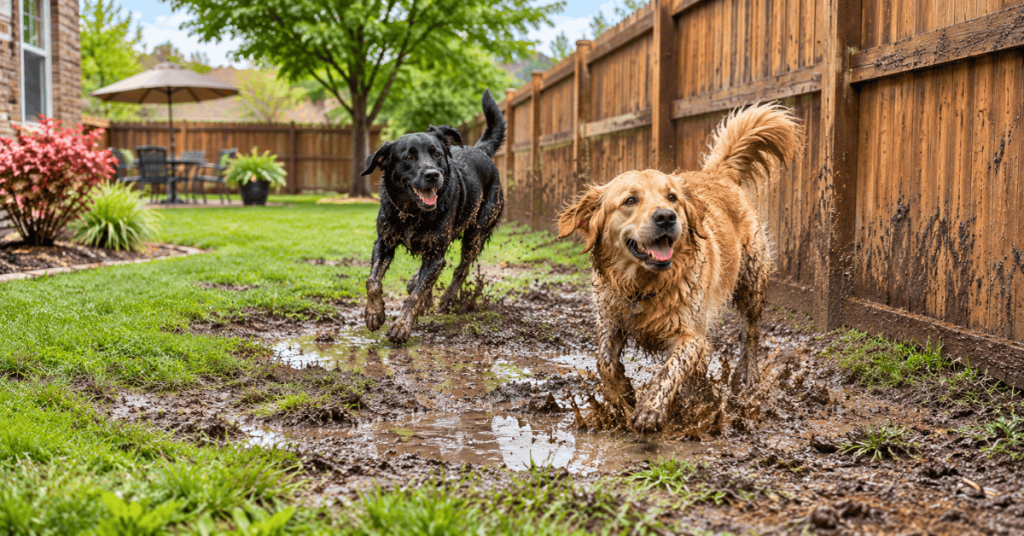
A muddy backyard can turn life with dogs into a daily cycle of dirty paws, damaged grass, muddy floors, and dog poop that seems to disappear the second it hits the ground. In Oklahoma, the problem can become especially frustrating when heavy rain meets slow-draining soil, compacted turf, low spots, or water pouring from a roof into the same part of the yard.
If you have ever stood by the back door with a towel while your dog proudly races inside wearing four mud-covered socks, you already understand the problem. Add two or three dogs following the same path to the fence, patio, or favorite potty spot, and a small wet area can become a miniature Oklahoma mud pit surprisingly fast.
The good news is that mud usually has a cause. Once we identify where the water is coming from and why the soil is staying wet, we can choose a solution that works better than simply throwing grass seed over the problem.
Why Oklahoma Backyards Get So Muddy With Dogs
A muddy dog yard usually develops because several problems are happening at the same time.
Oklahoma State University Extension notes that many Oklahoma soils contain relatively little sand and that clay-heavy or poorly structured soils may drain slowly. Roof runoff, shaded areas, low spots, poor grading, and saturated soil can worsen wet areas.
Dogs add another layer to the problem.
Repeated running, pacing, digging, and bathroom trips wear away grass and compress the soil. Once turf disappears, less vegetation protects the surface. Paws continue pressing wet soil together, and the same route can become muddy after nearly every rain.
Common causes include:
- Heavy or slow-draining soil
- Compacted ground
- Downspouts emptying into the yard
- Low spots that collect water
- Too much irrigation
- Heavy shade
- Thin or damaged grass
- Dogs repeatedly using the same paths
Before buying gravel, sod, seed, or drainage pipe, figure out which of these problems is actually creating the mud.
If wet weather also makes keeping up with pet waste difficult, our professional dog waste cleanup in Oklahoma City can help keep piles from becoming mixed into wet grass and mud.
You can also compare our yard cleanup options and rates to find a schedule that matches how many dogs use your backyard.
Start by Finding Where the Water Comes From
Walk the backyard during or immediately after a good rain.
Do not just look at the mud. Look for the water feeding it.
Watch roof downspouts. Check whether water flows from a neighbor’s property. Look for depressions where water collects. Watch roof downspouts.
If one section stays soggy long after the rest of the yard dries, the problem may involve grading, compacted soil, poor infiltration, or subsurface water rather than rainfall alone.
Fixing the water source is usually more effective than repeatedly repairing the mud it creates.
We Scoop Poop
Get your yard back without the hassle. Click below for a free instant quote for professional dog poop cleanup in Oklahoma City—no obligations, no contracts, and no hidden fees.
Redirect Roof and Downspout Water
A surprising amount of backyard mud starts at the roof.
Roofs cannot absorb rainfall, so gutters collect it and concentrate it in downspouts. If a downspout empties next to a favorite dog path, the ground may receive far more water than the surrounding lawn.
Extensions, properly designed drains, or other drainage systems can move roof water toward an appropriate discharge point.
The goal isn’t simply to push the problem into another part of the yard—or onto your neighbor’s property. Plan serious drainage changes so water leaves the problem area safely.
Check Your Sprinkler Schedule
Not every muddy Oklahoma yard needs more drainage equipment.
Sometimes it simply needs less irrigation.
Check sprinkler heads for leaks, overspray, broken components, and areas receiving water from more than one zone. Base Oklahoma lawn watering on actual need rather than running the same schedule regardless of rainfall.
If the soil is already saturated, adding irrigation only extends the muddy period.
After several rainy days, your lawn may need no supplemental water.
Compacted Soil Can Make Mud Worse
Dogs tend to create traffic patterns.
They follow fences, race from the back door, circle patios, visit gates, and return to favorite bathroom areas. Repeated traffic can compact the upper soil layer and reduce the space available for air and water movement.
Core aeration can help when compaction is part of the problem.
Aeration removes small plugs of soil and creates openings that improve air and water movement through the root zone. It can also help turf develop stronger roots.
Aeration will not fix every wet yard, however.
If water is collecting because the property has poor grading, a high water table, or a major drainage problem, punching holes in the lawn will not make all that water disappear.
Do Not Automatically Add Sand to a Muddy Clay Yard
This is where homeowners can accidentally make things worse.
Throwing a thin layer of sand over heavy clay is not the same as properly modifying the soil.
When soil improvement is needed, you must select the right material and incorporate it correctly. Depending on the site, that may involve quality topsoil, organic matter, or other amendments.
Likewise, gypsum is not a universal cure for every Oklahoma clay yard. OSU recommends soil testing when sodium-related soil problems are suspected because gypsum works best under specific soil conditions.
If you are dealing with persistent slick soil, unusual cracking, or areas that barely absorb water, testing the soil before buying amendments can save money and frustration.
Repair the Grass After You Fix the Water Problem
Grass is more than decoration in a dog yard.
Healthy turf helps protect soil from direct rainfall, erosion, and paw traffic. Bare ground turns to mud much faster than established turf.
But reseeding or laying sod before correcting drainage usually produces the same bare patch again.
Fix the water problem first. Then repair the lawn.
For Oklahoma dog owners, grass choice matters because some varieties handle heat, traffic, sun, and recovery better than others. Our guide to the best grass for dog-friendly Oklahoma yards explains the strengths and weaknesses of common turf choices.
Create a Durable Route for Heavy Dog Traffic
Sometimes the best solution is to stop fighting your dog’s preferred route.
If your dogs always run from the patio to the same gate or patrol the same fence line, grass may struggle no matter how many times you replace it.
A defined high-traffic path can reduce damage to the rest of the lawn.
Depending on your property, that might involve suitable gravel, pavers, a maintained mulch path, or another durable surface designed for outdoor use around pets.
The material should drain well, stay comfortable on paws, and suit your particular dog. Dogs that chew or swallow landscaping material require extra caution.
Give Saturated Areas Time to Recover
After heavy rain, try limiting access to the wettest section of the yard when practical.
Even a day or two can make a difference.
Temporary fencing, changing the route to the potty area, or using a different part of the yard can reduce repeated paw traffic while saturated soil firms up.
This is especially useful after you have seeded, repaired, aerated, or resodded a damaged area.
Do Not Let Dog Poop Disappear Into the Mud
Mud makes pet waste much harder to find and remove.
Soft ground can partially swallow a pile, while rain can soften waste and spread residue into surrounding soil. Foot traffic can then push the mess farther into the lawn.
Remove dog poop before prolonged rain whenever possible.
During wet periods, check the yard more frequently instead of waiting for piles to accumulate. Our guide to how often dog poop should be removed from a yard can help you build a practical routine.
If piles become difficult to spot in overgrown or messy areas, use the search method in our guide to finding hidden dog poop in the yard.
Bag collected waste and dispose of it properly rather than hosing it into the lawn, gutter, or storm drain. Our guide explains local options for disposing of dog waste in Oklahoma City.
Why Rain and Dog Waste Are a Bad Combination
Pet waste is not fertilizer.
When dog poop remains outside during rain, runoff can carry waste and its contaminants away from the original pile. That is one reason regular pickup becomes even more important during extended wet weather.
It also explains why simply spraying muddy dog poop with a hose is not a good cleanup strategy.
Remove the solid waste first and dispose of it. Avoid intentionally washing fecal material toward driveways, streets, gutters, or storm drains.
Keeping waste picked up also makes it easier to evaluate your actual drainage problem because you are dealing with mud—not mud mixed with hidden piles.
When a Muddy Yard Needs Professional Drainage Help
Some muddy spots can be improved with simple maintenance.
Others indicate a larger drainage problem.
Consider speaking with a qualified drainage or landscape professional when water repeatedly stands for long periods, flows toward the house, causes erosion, emerges from the ground, overwhelms existing drains, or affects a large section of the property.
Plan major grading, French drains, subsurface drainage, retaining structures, and changes to established drainage paths carefully.
Moving water without understanding where it will go next can create a new problem somewhere else.
Find The Perfect Scoop Plan
Answer a few quick questions about your yard and dogs, and we’ll help point you toward the cleanup plan that makes the most sense.
A Practical Muddy-Yard Plan for Dog Owners
Start with the cause, not the mud.
Watch what happens during rain. Redirect concentrated roof runoff. Make sure sprinklers are not adding unnecessary water. Address compaction when appropriate. Repair grass only after the moisture problem improves. Then consider durable surfaces for dog routes that receive constant traffic.
At the same time, stay ahead of pet waste.
A consistent cleanup schedule keeps poop from being buried, stepped into, or spread through wet areas. If you are unsure how frequently your particular yard should be cleaned, our dog poop cleanup frequency planner can help.
The “Bottom” Line: Fix the Water First
A muddy Oklahoma backyard is rarely solved by covering the mud and hoping for the best.
Find out why the soil stays wet.
For some yards, the answer may be as simple as redirecting a downspout or adjusting the sprinkler schedule. Other yards may need aeration, better turf, improved soil, a durable dog path, grading, or professional drainage work.
Dogs can intensify muddy conditions because they repeatedly travel across the same wet ground, but that does not mean we have to choose between having dogs and having a usable backyard.
Fix the water problem, protect the high-traffic areas, keep dog waste picked up, and give damaged turf a chance to recover.
Your dogs can handle the zoomies. We can handle what they leave behind. No contracts. Local, veteran-operated service. Less mess. Get your instant price today!
FAQs About Muddy Backyards and Dogs
Why does my Oklahoma backyard stay so muddy?
What is the best way to fix a muddy backyard with dogs?
What should I put down in a muddy dog yard?
Does aerating the lawn help a muddy backyard?
Should I add sand to a muddy clay yard?
How can I keep my dog from destroying a wet lawn?
Should I pick up dog poop before it rains?
When should I call a professional about backyard drainage?

About Carlton
Carlton Wolf is the founder of Poop Free OKC, a veteran-owned pet waste removal company serving Oklahoma City and the surrounding metro. As a U.S. Coast Guard veteran, Carlton built Poop Free OKC to provide reliable, professional yard cleanup for busy dog owners who want a cleaner, safer outdoor space without the hassle.
Sources
- Oklahoma State University Extension: Addressing Drainage Issues in the Urban Landscape
- Oklahoma State University Extension: Lawn Management in Oklahoma
- Oklahoma State University Extension: Improving Soil Quality
- CDC: Dogs — Healthy Pets, Healthy People
- EPA: Stormwater Best Management Practice — Pet Waste Management
PILES OF KNOWLEDGE
Pet Health & Safety
Pet Waste Removal Tips
Pet Yard & Home Care
1st Anniversary Special
Claim Your FREE Poop Scoop!
*The next 25 customers who sign up for recurring service.
You May Also Like…
Dog Poop Cleanup for Gravel and Rock Yards
Dog poop can fall between rocks, smear across gravel, and leave residue below the surface. Learn how to remove solid waste, diarrhea, odors, and contaminated material without spreading the mess.
Dog Poop on Concrete? How to Clean Patios and Hard Surfaces
Dog poop can stain concrete, leave odors behind, and work into porous patio surfaces. Learn how to remove fresh, dried, and loose waste without spreading the mess or damaging the surface.
How to Collect and Store a Dog Stool Sample for the Vet
Need to bring a dog stool sample to the vet? Learn how much to collect, what container to use, when to refrigerate it, and how fresh the sample should be.
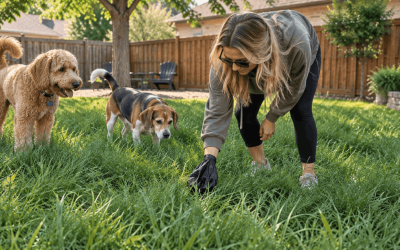
Dog Poop Hidden in Tall Grass or Leaves? How to Find It
Tall grass and fallen leaves can make dog poop surprisingly hard to find. Learn how to search your yard efficiently, uncover hidden piles, and clean them up without spreading the mess.
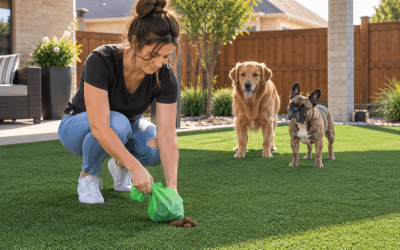
How to Clean Dog Poop From Artificial Turf
Dog poop can leave residue and odor behind on artificial grass. Learn how to remove solid and soft waste, rinse correctly, clean the turf, and prevent smells.
Why Do Dogs Circle and Sniff Before They Poop?
Dogs often sniff, circle, and carefully choose a spot before they poop. Learn why dogs do this, what scent has to do with it, and when the behavior may signal a problem.