Home » Blog » Pet Yard & Home Care »
Finding dog poop on the carpet is one of those moments that makes you stop in the doorway and reconsider every decision that led you to own a dog. The good news is that most accidents can be cleaned without ruining the carpet, rug, or couch—as long as we handle the mess in the right order.
If you have ever tried to grab a soft pile too quickly and accidentally pushed it farther into the carpet fibers, you already know why technique matters. What starts as one small accident can turn into a much larger stain when we scrub, step on it, soak it with cleaner, or let an enthusiastic dog investigate what we are doing.
The basic rule is simple: remove first, blot second, clean third, and dry completely. Avoid scrubbing because that can spread the waste and work it deeper into the fibers.
Why Dog Poop Can Be Difficult to Clean From Carpet
Carpet and upholstery are porous surfaces.
Unlike tile or concrete, they contain fibers, backing, padding, stuffing, and other layers where moisture and residue can travel.
A firm pile may stay mostly on the surface. Soft stool or diarrhea can soak through much faster.
The cleanup becomes more difficult when:
- The stool is loose or watery.
- Someone stepped in the accident.
- The dog walked through it.
- The poop dried before we found it.
- Cleaner was applied before removing the solids.
- Waste reached the carpet pad or furniture cushion.
- The fabric cannot safely tolerate much moisture.
If indoor pooping has started suddenly instead of being a one-time accident, our guide to why a dog may suddenly start pooping in the house explains when health, stress, aging, diet, or schedule changes may be involved.
If the bigger problem is keeping up with waste outside, our professional dog waste cleanup in Oklahoma City can handle the backyard before piles get stepped in or tracked indoors.
You can also compare our cleanup plans and pricing to find a service frequency that fits your dogs and yard.
How to Clean Fresh Dog Poop From Carpet
Fresh, formed stool is the easiest type of accident to clean.
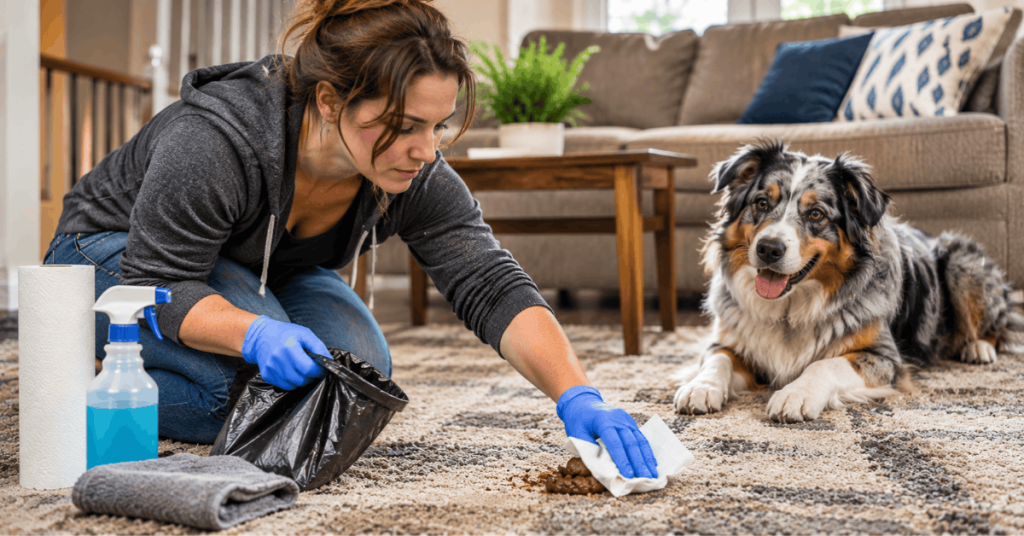
Put on disposable gloves and remove as much of the pile as possible.
Use a waste bag, rounded spoon, dull scraper, piece of cardboard, or another tool that lets you lift the waste instead of pressing down.
Work slowly.
If the stool starts breaking apart, move from the outside edge toward the center.
The goal is to make the contaminated area smaller—not spread it across more carpet.
Once the solid material is gone, dispose of it in a sealed bag.
We Scoop Poop
Get your yard back without the hassle. Click below for a free instant quote for professional dog poop cleanup in Oklahoma City—no obligations, no contracts, and no hidden fees.
Blot the Area—Do Not Scrub
If moisture or residue remains, use plain white paper towels or a clean white absorbent cloth.
Press down gently and lift.
Replace the towel as it becomes soiled and continue until little or no material transfers.
Avoid rubbing back and forth.
Scrubbing can spread the stain, distort carpet fibers, and push contamination deeper into the pile.
Working from the outside toward the center also helps keep the affected area contained.
Use a Cleaner Made for Carpet or Rugs
After removing the visible waste, treat the remaining spot with a cleaner intended for your particular carpet or rug.
Always read the product directions.
Before using an unfamiliar cleaner, test it on a hidden section first. Different dyes, fibers, backings, and finishes can react differently.
Use only the amount needed.
More cleaner does not automatically mean a cleaner carpet. Too much liquid can move through the carpet and into the padding underneath.
After cleaning, lightly rinse or blot according to the product instructions and remove as much moisture as possible.
How to Clean Dog Diarrhea From Carpet
Diarrhea requires a different approach because there may be very little solid material to scoop.
Start with disposable absorbent material.
Place white paper towels or another absorbent material over the loose stool and lift as much as possible before adding cleaner or water.
Do not grind the towel into the carpet.
Continue lifting and blotting until most of the material is gone.
Then clean the spot using a carpet-safe product.
If diarrhea soaked through the carpet and into the pad, surface cleaning may not reach everything underneath. You may need a wet extraction machine designed for carpet—or a professional carpet cleaner.
The same remove-first principle applies outside. Our guide to cleaning dog diarrhea from the yard explains how to handle loose stool without spreading it through grass and soil.
How to Remove Dried Dog Poop From Carpet
Dried poop can be easier to remove than a fresh, soft pile if you resist the urge to soak it immediately.
Pick up or gently break away the dry material first.
Use a rounded spoon, dull scraper, or similar tool that will not damage the carpet.
Once you’ve removed all loose material, vacuum up the dry crumbs.
Then treat any remaining stain with a carpet-safe cleaning product.
Adding liquid before removing the dried solids can rehydrate the poop and turn an easier cleanup back into a wet mess.
How to Get Dog Poop Smell Out of Carpet
If the visible stain is gone but the room still smells, some residue may remain.
Check whether the contamination reached:
- The carpet backing
- Carpet padding
- The floor underneath
- Rug backing
- Furniture stuffing
- Seams or edges
A pet stain and odor cleaner labeled for the material may help with remaining organic residue.
Follow the label and allow the area to dry completely before deciding whether the odor is gone.
If the smell returns after the carpet dries, contamination may be deeper than the surface.
At that point, professional extraction may be more effective than repeatedly soaking the carpet with household cleaners.
Our guide to what is really in dog poop explains why completely removing fecal residue matters beyond simply getting rid of the smell.
How to Clean Dog Poop From an Area Rug
Start the same way: remove solids and blot moisture.
Then check the rug’s care label.
Washable rugs may go through a washing machine, but not every rug can safely be soaked or machine washed.
Wool, jute, silk, natural fibers, handmade rugs, and rugs with specialty dyes or backings may require different care.
If the rug can be laundered, follow the manufacturer’s instructions and dry it completely.
For valuable or delicate rugs, professional cleaning may be the safer option.
How to Clean Dog Poop From Upholstery
Couches and chairs require extra caution because liquid can soak through the fabric and into foam or stuffing.
Carefully remove the solid material without pressing down.
Blot remaining moisture.
Next, check the furniture care label or manufacturer’s cleaning instructions before applying anything.
Use a product approved for the upholstery material and avoid saturating the cushion.
Too much moisture can spread contamination farther into the cushion and may create water marks, odor, or long drying times.
If diarrhea has soaked deeply into a removable cushion, consider professional upholstery cleaning.
Do You Need to Disinfect Carpet After Dog Poop?
Cleaning and disinfecting are different jobs.
Cleaning physically removes waste, dirt, and many germs. Disinfection uses a product designed to kill certain remaining germs.
For an ordinary accident from a healthy dog, thorough cleaning is usually the priority.
Additional disinfection may make sense when the dog has a diagnosed infectious illness or parasite, or when someone in the household is especially vulnerable to infection.
Only use a disinfecting product if its label specifically allows use on the soft surface you are treating.
Clean first.
A disinfectant cannot work properly when fecal material is still covering the fibers.
If your veterinarian has diagnosed Giardia, worms, or another infection, follow their specific environmental-cleaning recommendations rather than relying on a general household cleaning routine.
Learn more about why prompt waste removal matters in our guide to the health risks associated with neglected dog waste.
Should You Use Bleach on Carpet?
Bleach should not be your default pet-accident cleaner.
It can remove or alter carpet color, damage some fibers, and may not be approved for your particular flooring.
Don’t assume diluting it makes it safe for carpet.
If disinfection is medically necessary, choose a product specifically labeled for the surface and intended use.
Never mix bleach with ammonia, vinegar, acids, or other household cleaners.
What About Vinegar and Baking Soda?
Home remedies are popular because most of us already have them in the kitchen.
That does not mean they are right for every carpet or upholstery fabric.
Vinegar may affect certain fibers, dyes, finishes, or natural stone near the carpet. Baking soda can help absorb some odors, but it doesn’t replace physical cleaning and shouldn’t be treated as a disinfectant.
A cleaner made and tested for carpet or upholstery usually gives us clearer instructions and fewer surprises.
Wash Your Hands After Cleanup
Dog poop can contain germs that may make people or animals sick.
Even if you wear gloves or use a bag, wash your hands with soap and running water after cleaning the accident.
Keep children and other pets away from the area while you work.
Bag disposable towels, gloves, and fecal material before putting them in the trash.
Also clean any reusable tools that came into contact with the waste.
Find The Perfect Scoop Plan
Answer a few quick questions about your yard and dogs, and we’ll help point you toward the cleanup plan that makes the most sense.
When an Indoor Poop Accident May Need a Vet Visit
One carpet accident does not automatically mean something is wrong.
Repeated or sudden accidents deserve more attention, especially in a dog that was previously house-trained.
Call your veterinarian if indoor pooping comes with:
- Repeated diarrhea
- Blood in the stool
- Vomiting
- Straining
- Pain
- Loss of appetite
- Low energy
- Weight loss
- Major changes in stool
- Sudden accidents in an older dog
Cleaning the carpet solves the mess.
Finding the reason for repeated accidents helps prevent the next one.
The “Bottom” Line: Remove First and Blot—Never Scrub
Dog poop on carpet looks intimidating, but the cleanup becomes much easier when we keep the mess contained.
Remove solid material first.
Blot moisture instead of rubbing it. Use a cleaner designed for the carpet, rug, or upholstery. Avoid soaking the material, and allow everything to dry completely.
For diarrhea, deep contamination, expensive rugs, or waste that reaches carpet padding or furniture stuffing, professional cleaning may be the safest solution.
And if indoor accidents suddenly become a pattern, talk with your veterinarian instead of treating every mess as only a cleaning problem.
Your dog may occasionally surprise you inside. We can at least keep the backyard from making the problem worse. No contracts. Local, veteran-operated service. Less mess. Get your instant price today!
8 FAQs About Cleaning Dog Poop From Carpet
What is the best way to clean dog poop from carpet?
How do you remove dried dog poop from carpet?
How do you clean dog diarrhea from carpet?
How do you get dog poop smell out of carpet?
Can I use vinegar to clean dog poop from carpet?
Can baking soda remove dog poop odor from carpet?
Should I disinfect carpet after a dog poops on it?
How do you clean dog poop from a couch or upholstery?

About Carlton
Carlton Wolf is the founder of Poop Free OKC, a veteran-owned pet waste removal company serving Oklahoma City and the surrounding metro. As a U.S. Coast Guard veteran, Carlton built Poop Free OKC to provide reliable, professional yard cleanup for busy dog owners who want a cleaner, safer outdoor space without the hassle.
PILES OF KNOWLEDGE
Pet Health & Safety
Pet Waste Removal Tips
Pet Yard & Home Care
1st Anniversary Special
Claim Your FREE Poop Scoop!
*The next 25 customers who sign up for recurring service.
You May Also Like…
Stepped in Dog Poop? How to Clean Your Shoes and Remove the Smell
Stepped in dog poop? Learn how to remove waste from shoes, clean deep tread, eliminate odor, disinfect when needed, and avoid tracking the mess indoors.
Dog Poop Cleanup for Gravel and Rock Yards
Dog poop can fall between rocks, smear across gravel, and leave residue below the surface. Learn how to remove solid waste, diarrhea, odors, and contaminated material without spreading the mess.
Muddy Backyard Solutions for Dog Owners in Oklahoma
Tired of muddy paws, bare grass, and dog poop disappearing into wet soil? Learn practical ways Oklahoma dog owners can improve drainage, reduce mud, protect grass, and keep the backyard easier to maintain.
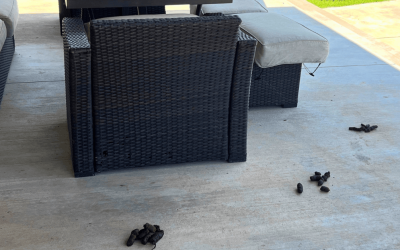
Dog Poop on Concrete? How to Clean Patios and Hard Surfaces
Dog poop can stain concrete, leave odors behind, and work into porous patio surfaces. Learn how to remove fresh, dried, and loose waste without spreading the mess or damaging the surface.
How to Collect and Store a Dog Stool Sample for the Vet
Need to bring a dog stool sample to the vet? Learn how much to collect, what container to use, when to refrigerate it, and how fresh the sample should be.
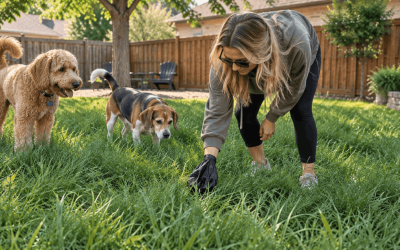
Dog Poop Hidden in Tall Grass or Leaves? How to Find It
Tall grass and fallen leaves can make dog poop surprisingly hard to find. Learn how to search your yard efficiently, uncover hidden piles, and clean them up without spreading the mess.