Home » Blog » Pet Yard & Home Care »
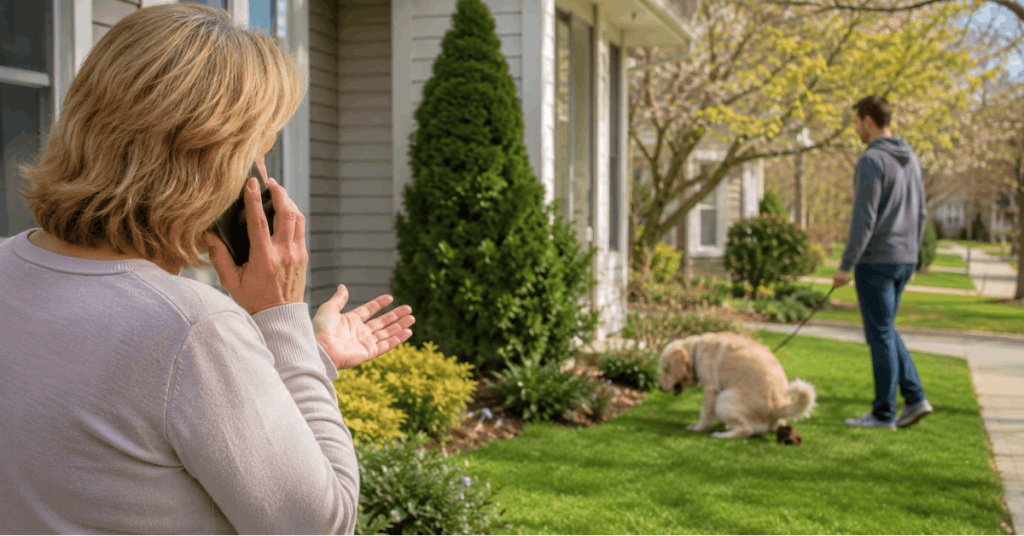
Few neighborhood problems create frustration faster than dog poop being left in your yard.
At first, it may seem minor. But when it keeps happening, the situation can quickly turn into:
- ongoing stress
- lawn damage
- odor problems
- tension between neighbors
One of the most common questions homeowners ask is:
“Can I actually report my neighbor for this?”
The short answer is: Yes, in many situations you can.
But before escalating the issue, there are a few important things to understand.
This guide walks through:
- When you can report it
- who to contact
- What evidence helps
- and how to handle the situation without making it worse
Even before the situation is fully resolved, many homeowners use professional dog poop removal services to keep their yard clean, usable, and free from ongoing buildup.
When Does Dog Poop Become a Reportable Problem?
A single incident usually doesn’t justify formal action.
But repeated behavior is different.
The issue becomes more serious when:
- waste repeatedly ends up in your yard
- The neighbor ignores requests
- odors or health concerns develop
- Shared spaces become unusable
At that point, documentation and local ordinances matter.
Situations involving a neighbor not picking up dog poop often become more serious once the problem becomes repeated or starts affecting surrounding properties.
We Scoop Poop
Get your yard back without the hassle. Click below for a free instant quote for professional dog poop cleanup in Oklahoma City—no obligations, no contracts, and no hidden fees.
If a neighbor repeatedly leaves dog waste in your yard, there are smart ways to handle the situation without making it worse. Here's the best step-by-step approach.
Most situations are resolved faster with a respectful conversation first. Staying calm keeps the issue from escalating unnecessarily.
If the problem continues, keep track of dates, photos, or video footage so you have a clear record of what's happening.
Many cities have pet waste ordinances requiring immediate cleanup. Understanding your local rules gives you leverage if needed.
If the issue becomes ongoing, you may be able to contact your HOA, code enforcement, or local animal control department.
Throwing waste back, arguing publicly, or retaliating usually creates more tension and rarely solves the problem long term.
Even when it's not your dog, consistent cleanup helps reduce odors, lawn damage, bacteria buildup, and ongoing frustration.
Most Cities Have Dog Waste Laws
Many homeowners are surprised to learn that pet waste laws are common.
These ordinances often require:
- immediate cleanup of dog waste
- proper disposal
- keeping dogs under control on walks
Violations can sometimes lead to:
- warnings
- HOA action
- fines or citations
If you live locally, understanding Oklahoma City’s dog poop laws can help you identify which options may apply to your specific situation.
Start With a Calm Conversation First
In many cases, the fastest solution is still a respectful conversation.
Approaching the situation calmly:
- avoids unnecessary conflict
- gives the person a chance to correct it
- prevents the issue from escalating too quickly
Simple and direct usually works best.
What If Talking Doesn’t Work?
If the issue continues after you’ve addressed it politely, it may be time to document the problem.
Helpful documentation includes:
- photos
- dates and times
- repeated incidents
- video footage if available
This creates a clear timeline if the situation needs to be reported later.
Who Can You Report It To?
Depending on where you live, complaints may go to:
HOA or Property Management
Many neighborhoods have pet waste rules built into HOA agreements.
Local Code Enforcement
Some cities handle repeated pet waste complaints through code enforcement departments.
Animal Control
Animal control may become involved if:
- Leash laws are violated
- The issue becomes excessive
- Dogs are repeatedly trespassing
When the problem becomes ongoing or poses a public safety risk, animal control can help enforce local rules and discourage repeat violations.
What NOT To Do
When frustration builds, it’s easy to react emotionally.
But these approaches usually make things worse:
- throwing waste back into their yard
- public arguments
- threats or harassment
- damaging property
The goal is to solve the problem—not create a larger dispute.
It's frustrating when someone repeatedly leaves dog waste behind, but reacting emotionally often creates bigger problems than the original issue.
Throwing dog waste back into someone else's yard may feel satisfying in the moment, but it usually escalates the conflict instead of resolving it.
Arguments in the street or online neighborhood groups tend to increase tension and make productive conversations much harder later.
Threatening behavior, repeated messages, or harassment can quickly shift the situation in the wrong direction and create unnecessary legal issues.
Damaging fences, signs, lawns, or anything else out of frustration almost always creates a much larger problem than the original complaint.
Why Dog Waste Is More Serious Than People Think
Dog poop isn’t just unpleasant.
It can:
- spread bacteria and parasites
- damage grass
- attract pests
- contaminate soil and water runoff
Improper disposal can also be a problem when a neighbor fails to pick up dog poop, especially when waste repeatedly ends up on someone else’s property or in shared areas.
Many homeowners are surprised to learn how long dog poop takes to decompose, especially when waste is repeatedly left behind in the same areas.
Protecting Your Yard Moving Forward
If the issue keeps happening, homeowners often add:
- small signs
- cameras
- motion lights
- fencing or boundary markers
These steps can discourage repeat behavior without confrontation. For added protection and odor control, some homeowners also use PF Fresh™ Yard Deodorizing to help improve the overall outdoor environment.
Find The Perfect Scoop Plan
Answer a few quick questions about your yard and dogs, and we’ll help point you toward the cleanup plan that makes the most sense.
The Easiest Way to Stay Ahead of the Problem
Even if the mess isn’t coming from your own dog, you still have to deal with the impact.
That’s why many homeowners choose a consistent cleanup routine to:
- keep the yard usable
- prevent buildup
- reduce odor
- avoid long-term lawn damage
Consistency makes a huge difference. Many homeowners eventually switch to a weekly or bi-weekly dog poop pickup service to stay ahead of buildup and avoid dealing with recurring yard issues altogether.
Consider a Consistent Cleanup Solution
Sometimes the easiest way to reduce stress is to keep the yard clean, no matter what happens next door.
Many homeowners in the OKC area choose Poop Free OKC to help maintain a cleaner, healthier outdoor space year-round.
Regular cleanup helps:
- eliminate lingering waste
- keep outdoor areas more enjoyable
- reduce bacteria and odor buildup
A consistently clean yard is easier to maintain—and easier to enjoy.
The “Bottom” Line
Yes, you can often report a neighbor for not picking up dog poop—but starting calmly and handling the situation properly usually leads to the best outcome.
Know your local rules, document ongoing issues, and focus on protecting your property without unnecessarily escalating conflict.
👉 Want a cleaner yard without the stress? Get an OKC dog poop removal quote and let us handle the dirty work.
Dog Poop Reporting Information for the OKC Metro
If ongoing dog waste issues become a repeated problem, Oklahoma City provides several ways to report violations and sanitation concerns.
You can:
- Contact the OKC Action Center at (405) 297-2535
- Submit a complaint online at okc.gov
- Use the official OKC mobile app
- Contact OKC Animal Welfare at (405) 297-2255 for leash law or animal-related concerns
If you decide to report the issue, it helps to:
- Document repeated incidents with photos or videos
- Include the address where the issue is happening
- Provide details about how often the problem occurs
- Contact your HOA or property manager if applicable
*Whenever possible, try to handle the situation calmly and respectfully first, as a simple conversation is often the fastest way to resolve the problem without creating unnecessary conflict.
Frequently Asked Questions
Can homeowners file complaints about repeated dog poop problems?
Are pet owners legally required to clean up dog waste?
What should I do before reporting a neighbor?
Can dog poop create health concerns in residential areas?
Will an HOA usually get involved over dog poop complaints?
What kind of proof helps when reporting ongoing problems?
Can repeated trespassing by dogs become a larger issue?
What’s the best long-term way to deal with ongoing dog waste issues?

About Carlton
Carlton Wolf is the founder of Poop Free OKC, a veteran-owned pet waste removal company serving Oklahoma City and the surrounding metro. As a disabled U.S. Coast Guard veteran, Carlton built Poop Free OKC to provide reliable, professional yard cleanup for busy dog owners who want a cleaner, safer outdoor space without the hassle.
PILES OF KNOWLEDGE
Pet Health & Safety
Pet Waste Removal Tips
Pet Yard & Home Care
Grand Opening Special
Claim Your FREE Poop Scoop!
*First 50 who sign up for recurring service.
You May Also Like…
Why You Don’t See White Dog Poop Anymore
White dog poop used to be common, but changes in dog food, better cleanup habits, and balanced diets made it rare. Learn what pale dog stool may mean today.
Why Do Dogs Smell People’s Crotches and How To Stop Them
Dogs smell people’s crotches because they gather scent information. Learn why it happens, when it is normal, and how to redirect it.
How to Calm a Dog During Fireworks
Fireworks can cause fear, shaking, hiding, and panic in dogs. Learn how to prepare your home, reduce the noise, prevent escapes, and help your dog feel safer before, during, and after fireworks.
Using a Lawn Sweeper to Cleanup Dog Poop: Pros and Cons
Thinking about using a lawn sweeper for dog poop? Learn when it might help, where it fails, and why professional cleanup works better.
How Long Can a Dog Hold Their Pee?
Wondering how long a dog can hold their pee? Learn what’s normal, what’s not, and when you should be concerned.
How Hot Is Too Hot for Your Dog?
Oklahoma heat can be dangerous for dogs. Learn safe temperature ranges, warning signs, pavement risks, and summer yard safety tips.